
If your car’s misfiring, stalling, or burning more fuel than usual, a faulty ignition coil could be the problem.
Testing it with a multimeter is a simple way to find out if it’s working right.
In this guide, we’ll show you how to test your ignition coil using a multimeter, what tools you’ll need, how to do the test, and how to understand your results so you know what to do next.
How to test ignition coil with multimeter?
To test an ignition coil, set the multimeter to resistance mode. Test the primary and secondary windings. If the resistance readings are outside the manufacturer’s specs, the coil may be faulty.
Key Takeaways
- A multimeter can help you diagnose faulty ignition coils by testing their resistance.
- The process involves measuring the primary and secondary resistance of the ignition coil.
- Testing the ignition coil with a multimeter is an affordable and effective diagnostic method.
Tools You’ll Need
Before you start testing your ignition coil, make sure you have the following tools ready:
Digital Multimeter: A multimeter is a versatile tool used to measure voltage, current, and resistance.
Screwdriver: To remove any covers or components blocking access to the ignition coil.
Vehicle’s Service Manual: The manual will provide the specific resistance values for your ignition coil.
Safety Precautions
Testing the ignition coil involves handling electrical components. To avoid injury or damaging the ignition system, follow these safety precautions:
Disconnect the battery: Always disconnect the car’s negative battery terminal before working on any electrical components.
Work in a well-ventilated area: Ensure that your workspace is free of any flammable materials.
Use insulated tools: This will prevent accidental short circuits while testing the coil.
Step-by-Step Guide: How to Test an Ignition Coil with a Multimeter
Follow these steps to test the ignition coil:
Locate the Ignition Coil
The first step is to locate the ignition coil. Depending on your vehicle’s make and model, the ignition coil may be located on the engine block or near the spark plugs.
For multi-cylinder engines, the ignition coil may be located on each individual spark plug or in one assembly.
Consult your vehicle’s service manual for the exact location of the coil. Once you’ve found the coil, the next step depends on what condition it’s in.
If you’re dealing with wear or misfires, scheduling an auto ignition repair in Erlanger KY can save you time and headaches down the road. You can also look into services like ignition coil replacement near me monfort heights if you need a quick fix.
Disconnect the Coil
Once you’ve located the ignition coil, use a screwdriver to remove any covers that are blocking access.
Next, disconnect the coil’s electrical connector. Make sure not to damage any wires when disconnecting them.
Set the Multimeter to Measure Resistance
Turn your digital multimeter’s dial to the resistance (ohms) setting. You will typically be measuring two types of resistance: primary and secondary.
You may need to consult your service manual for the correct resistance values for your vehicle’s ignition coil.
Test the Primary Resistance
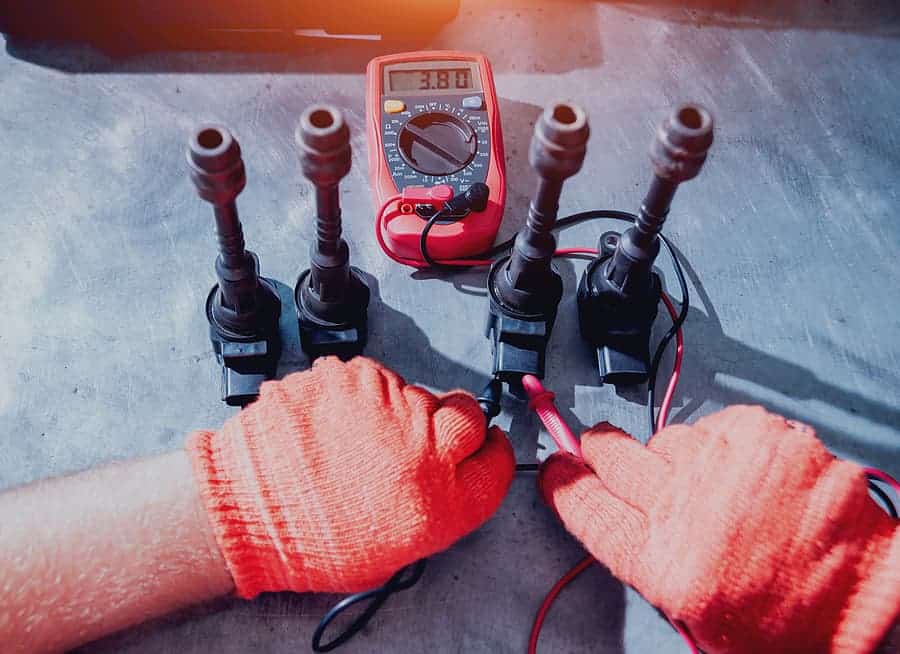
To test the primary resistance, place one multimeter probe on the positive terminal (where the connector attaches to the coil) and the other probe on the negative terminal.
The resistance should fall within the manufacturer’s specified range (usually between 0.4 to 2.0 ohms for most vehicles).
If the reading is significantly higher or lower than the recommended range, the coil is likely faulty and needs to be replaced.
Test the Secondary Resistance
Now, move on to testing the secondary resistance. Place one probe on the positive terminal and the other on the terminal that connects to the spark plug wire.
The secondary resistance should be much higher than the primary resistance, usually between 6,000 and 20,000 ohms.
Again, refer to your service manual for the specific range. If the secondary resistance is out of range, it indicates a fault in the ignition coil’s internal wiring or insulation.
Compare the Results
After testing both primary and secondary resistance, compare the readings with the specifications in your vehicle’s manual.
If the resistance values fall within the specified range, the ignition coil is likely functioning properly. If not, you may need to replace the ignition coil.
Reassemble and Test the Vehicle
Once you’ve finished testing the coil, reassemble any components you removed and reconnect the coil.
Reconnect the vehicle’s battery and start the engine. If the engine starts without issues and runs smoothly, the ignition coil is in good condition.
If you still experience issues, the problem may lie elsewhere in the ignition system.
What the Results Mean
If you get a reading that falls outside the normal range during the resistance test, it’s a sign that the ignition coil is faulty. Here’s what you might expect from abnormal readings:
Too High Resistance
If the resistance is too high, it indicates a break in the coil’s windings, which can prevent the coil from generating enough power to create a spark.
Too Low Resistance
If the resistance is too low, it could mean that the coil has internal short circuits, preventing it from properly charging.
No Resistance
A complete lack of resistance suggests that the coil is damaged and needs to be replaced.
When Should You Replace the Ignition Coil?
The ignition coil plays a crucial role in your vehicle’s ignition system by converting the battery’s low voltage into a high voltage to ignite the fuel and air mixture in the engine.
A malfunctioning ignition coil can lead to poor engine performance and even damage to other components in the ignition system.
Knowing when to replace the ignition coil can save you from more costly repairs down the road. Below, we’ll discuss the signs that indicate it’s time for a replacement.
Out-of-Range Resistance Readings
One of the most reliable ways to determine if your ignition coil is failing is by checking the resistance readings.
A multimeter can help you measure the coil’s primary and secondary resistance.
If the resistance readings are out of range, it indicates that the coil is no longer functioning properly. Ignition coils are designed to have specific resistance ranges, and deviations from these values suggest that the coil has developed an internal fault.
This could cause inconsistent or weak sparks, resulting in engine misfires, rough running, or failure to start.
If you’re unsure how to check the resistance, it’s best to have a mechanic test it for you. If the readings are outside the recommended range, it’s time to replace the ignition coil.
Engine Misfires and Rough Running
One of the most common symptoms of a failing ignition coil is engine misfires. Misfires occur when the spark plug fails to ignite the air-fuel mixture in the engine’s cylinder.
This can lead to rough running, poor acceleration, and in some cases, a noticeable lack of power.
You may feel jerking or stumbling as the engine misfires, which can significantly affect your driving experience.
A misfiring engine could also be a sign of other issues, but if you experience frequent or persistent misfires, it’s likely that your ignition coil needs replacing.
If the coil is not working properly, it won’t provide the necessary spark to ignite the fuel mixture, leading to engine performance problems.
Difficulty Starting the Vehicle
If you’re having trouble starting your vehicle, the ignition coil could be the culprit.
When the ignition coil fails, it cannot generate the high voltage needed to ignite the fuel mixture, making it difficult for the engine to start.
This problem might start out as intermittent, where the car will start occasionally, but over time, it may become more frequent or even prevent the car from starting at all.
While other components, like the battery or starter motor, can also cause starting issues, a malfunctioning ignition coil should be considered if the problem persists or is accompanied by other symptoms like misfiring or rough idling.
Visible Signs of Wear
Over time, ignition coils can experience wear and tear. The most obvious sign is visible damage, such as cracks, corrosion, or burnt areas on the coil itself.
If you notice any physical damage to the ignition coil, it’s crucial to replace it immediately.
Corrosion or cracks can cause poor connections or a complete failure of the coil, which can lead to engine misfires, starting problems, and a decrease in overall engine performance.
If you see any rust, dirt, or signs of overheating around the ignition coil, these are all signs that the component is no longer functioning at its best.
Replacing it can help restore the efficiency of your ignition system and prevent further damage to your engine.
Frequently Asked Questions (FAQs)
1. How do I know if my ignition coil is faulty?
Symptoms like engine misfires, rough idling, poor acceleration, or trouble starting the engine can indicate a faulty ignition coil. Testing it with a multimeter is a reliable way to confirm if it’s defective.
2. Can a bad ignition coil cause damage to my engine?
Yes, a malfunctioning ignition coil can cause engine misfires, which can lead to poor fuel efficiency, damaged spark plugs, and even engine damage over time if left unaddressed.
3. Can I replace the ignition coil myself?
Yes, replacing the ignition coil is a relatively simple DIY task, but it requires access to the correct tools and knowledge of your vehicle’s ignition system. Always refer to your service manual for guidance.
Conclusion
Testing your ignition coil with a multimeter is an essential skill for diagnosing issues with your car’s ignition system.
By measuring both the primary and secondary resistance, you can identify whether the ignition coil is working correctly or if it needs to be replaced.
Regular maintenance of the ignition system can help prevent more serious issues, ensuring that your car runs smoothly and efficiently.
If the resistance readings fall outside the recommended range, replacing the ignition coil can save you from more expensive repairs down the road.
