Is your car stalling, idling rough, or losing power? A bad throttle body could be to blame. It controls airflow to the engine, and when it fails, performance suffers.
This guide covers the key symptoms of a faulty throttle body and what steps you can take to fix the issue before it leads to bigger problems.
What are the symptoms of a bad throttle body?
Symptoms of a bad throttle body include rough idling, stalling, poor acceleration, or hesitation when you press the gas pedal. If you notice any, it’s time for a thorough inspection.
Key Takeaways
- A bad throttle body can lead to poor engine performance, stalling, and erratic idling.
- Common symptoms include rough idling, poor acceleration, and the check engine light coming on.
- Early detection and repair of throttle body issues can prevent more serious engine problems.
What Does the Throttle Body Do?
Before diving into the symptoms, it’s essential to understand the function of the throttle body.
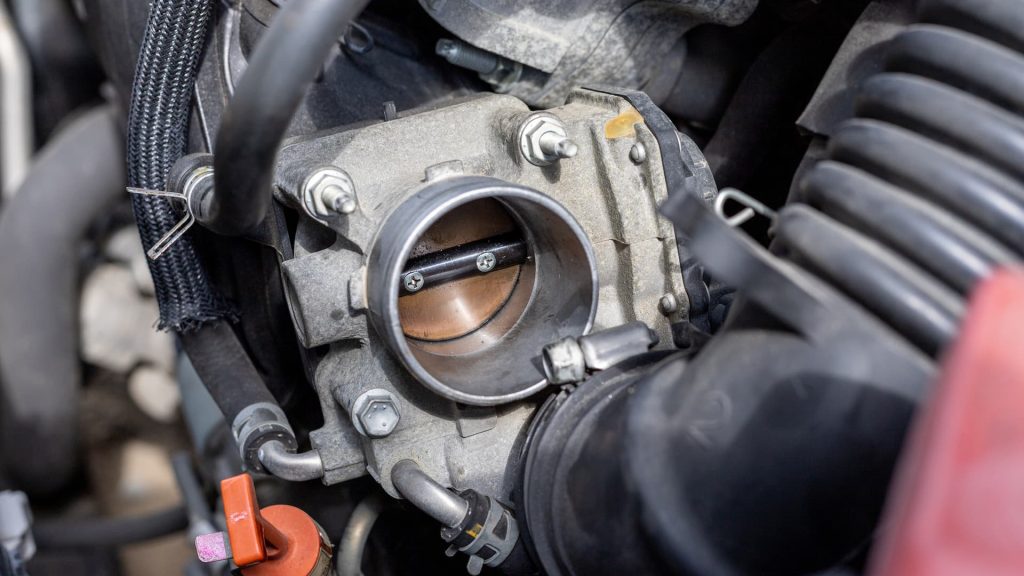
The throttle body is part of your vehicle’s air intake system, located between the air filter and the intake manifold.
The throttle body is a crucial part of your vehicle’s air intake system. It controls the amount of air that flows into the engine, which in turn affects engine performance.
A malfunctioning throttle body can cause a variety of symptoms that affect your car’s operation. Recognising these symptoms early can help you avoid serious damage and costly repairs.
In this article, we will explore the common signs of a bad throttle body and what you can do about it.
It regulates the amount of air entering the engine, which is mixed with fuel to create the combustion needed for the engine to run.
When you press the accelerator pedal, the throttle body opens, allowing more air into the engine to increase power and speed.
When the pedal is released, the throttle body closes to limit airflow and reduce the engine’s power.
Symptoms of a Faulty Throttle Body
Several warning signs indicate that your throttle body may be failing. Below are some of the most common symptoms you may experience if your throttle body is not functioning properly.
Rough Idling
One of the most common symptoms of a bad throttle body is rough idling.
If you notice that your car’s engine is idling erratically, either too high or too low, it could be a sign that the throttle body is malfunctioning.
A dirty or damaged throttle body can cause the air-to-fuel mixture to become unbalanced, leading to a rough idle.
In some cases, the engine may stall at idle or struggle to maintain a consistent RPM. This can be particularly noticeable when the car is stopped at a red light or when idling in traffic.
Poor Acceleration
A faulty throttle body can cause delayed or sluggish acceleration.
If you find that your car doesn’t accelerate as smoothly as it should, or it takes longer to pick up speed when you press the accelerator, the throttle body could be the culprit.
This is because a damaged throttle body may fail to regulate the correct amount of air needed for the engine to perform optimally.
When the throttle body is malfunctioning, the engine may not receive the proper amount of air, resulting in poor acceleration and hesitation during acceleration.
Check Engine Light
The check engine light coming on is another common symptom of a bad throttle body. Modern vehicles are equipped with sensors that monitor the performance of the throttle body.
If these sensors detect a problem, such as inconsistent airflow or an issue with the throttle position sensor, the check engine light will illuminate.
If the check engine light comes on and you suspect the throttle body is the issue, it’s a good idea to use an OBD-II scanner to retrieve any trouble codes.
Codes related to the throttle body often include P0120 to P0124, which indicate throttle position sensor issues.
Engine Stalling
A failing throttle body can cause the engine to stall unexpectedly. This can happen when the throttle body fails to adjust the airflow properly, leading to an imbalance in the air-fuel mixture.
As a result, the engine may not be able to maintain idle or may stall completely while driving.
This is a dangerous symptom, as it can cause your car to lose power while driving, increasing the risk of an accident.
If you experience stalling frequently, it’s important to get your throttle body checked as soon as possible.
Unresponsive Acceleration Pedal
If you press the accelerator and there’s no response, or if the throttle body is slow to respond, it could be a sign of a malfunction.
This issue may occur due to a buildup of carbon deposits on the throttle plate, causing it to become stuck or sluggish in its movement.
An unresponsive acceleration pedal can make it difficult to control your car’s speed, particularly in situations where you need quick acceleration, such as merging onto highways or passing other vehicles.
Increased Fuel Consumption
A bad throttle body can lead to increased fuel consumption.
Since the throttle body controls the air-fuel mixture, a malfunction can result in an incorrect mixture, causing the engine to burn more fuel than necessary.
If you notice a sudden increase in fuel consumption without any other obvious cause, it could be due to an issue with the throttle body.
Common Causes of Throttle Body Problems
Several factors can contribute to a faulty throttle body. Understanding these causes can help you prevent or address issues early on.
Carbon Buildup
Over time, carbon deposits can accumulate on the throttle plate, leading to restricted airflow and improper operation.
This is particularly common in vehicles with high mileage or those that frequently drive short distances.
Throttle Position Sensor Failure
The throttle position sensor is responsible for monitoring the position of the throttle plate.
If the sensor fails or becomes damaged, it can send incorrect signals to the engine control unit (ECU), causing erratic performance.
Dirt and Debris
Dirt and debris can enter the throttle body through the air intake system.
If left unchecked, this can cause the throttle body to become clogged or damaged, affecting its ability to regulate airflow.
Electrical Issues
Electrical problems with the throttle body, such as a faulty wiring connection or a malfunctioning sensor, can also cause issues.
These electrical failures may result in the throttle body not responding correctly to input from the accelerator pedal.
How to Fix a Bad Throttle Body
If you suspect that your throttle body is malfunctioning, there are a few steps you can take to address the issue.
However, depending on the severity of the problem, you may need professional help.
Clean the Throttle Body
One of the most common and simplest fixes for a bad throttle body is cleaning it. Carbon buildup and dirt can accumulate on the throttle plate and restrict airflow.
Cleaning the throttle body can often restore its functionality and improve performance. Use a throttle body cleaner and follow the manufacturer’s instructions to clean the component properly.
Replace the Throttle Position Sensor
If the throttle position sensor is faulty, it may need to be replaced. The sensor sends signals to the ECU, and a malfunction can cause the engine to run poorly.
Replacing the sensor can resolve issues like rough idling and poor acceleration.
Replace the Throttle Body
In some cases, cleaning or replacing the sensor won’t fix the problem, and the throttle body itself may need to be replaced.
This can be a more expensive solution, but it will restore full functionality to the air intake system.
Frequently Asked Questions
1. Can a bad throttle body cause engine stalling?
Yes, a faulty throttle body can cause the engine to stall due to improper airflow and air-fuel mixture imbalances.
2. How much does it cost to replace a throttle body?
The cost of replacing a throttle body can range from $300 to $1,000, depending on the vehicle model and the complexity of the repair.
3. How often should the throttle body be cleaned?
It’s a good idea to clean the throttle body every 30,000 to 50,000 miles, depending on your driving conditions and vehicle make.
Conclusion
A bad throttle body can cause a variety of symptoms, including rough idling, poor acceleration, stalling, and increased fuel consumption.
Recognising these symptoms early can save you time and money by addressing the issue before it becomes more severe.
Regular maintenance, such as cleaning the throttle body and checking the throttle position sensor, can help prevent problems.
If you experience any of the symptoms listed above, it’s important to have your throttle body inspected and repaired by a professional to ensure optimal engine performance.
