
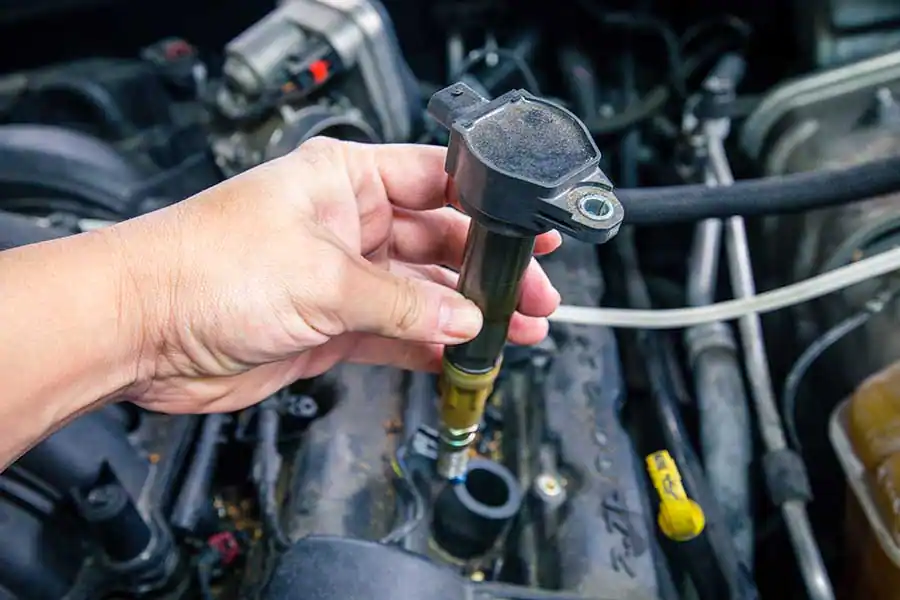
Your ignition coil is a key part of your car’s ignition system it turns your battery’s voltage into the spark needed to fire up your engine.
When it starts to fail, you might notice misfires, poor gas mileage, or hard starts.
In this guide, we’ll cover how often to replace your ignition coil, warning signs to watch for, and tips to help it last longer. Many drivers also search for ignition coil pack replacement erlanger ky when these symptoms start showing up.
How often ignition coil replacement?
Ignition coils typically last 100,000 miles, but they can wear out faster if you have engine issues. Replace them when you notice misfiring or poor fuel efficiency to keep your car running smoothly.
Key Takeaways
- Ignition coils typically last between 60,000 to 100,000 miles but may need replacement sooner if they are damaged or malfunctioning.
- Common signs of a faulty ignition coil include engine misfires, rough idling, and poor fuel efficiency.
- Regular maintenance, including spark plug inspection, can help extend the life of your ignition coils.
What is an Ignition Coil and How Does It Work?
Before diving into the replacement process, it’s important to understand the function of the ignition coil.
The ignition coil is responsible for converting the 12-volt electricity from your car’s battery into the much higher voltage needed to ignite the fuel in your engine’s cylinders.
This is achieved through electromagnetic induction.
Each coil is connected to the spark plug, and when the engine control unit (ECU) sends a signal to the coil, it releases a high-voltage spark to ignite the air-fuel mixture in the engine.
This process is crucial for keeping the engine running smoothly.
How Often Should You Replace an Ignition Coil?
Most ignition coils are designed to last for 60,000 to 100,000 miles.
However, the actual lifespan can vary depending on factors such as driving conditions, the make and model of your vehicle, and the quality of the ignition coil itself.
If you’re hitting that mileage range or noticing misfires, it might be time to act. Getting an ignition coil replacement in Erlanger KY can help restore smooth starts and prevent engine trouble before it snowballs.
Typical Lifespan
60,000 to 100,000 Miles: Most ignition coils last this long under normal driving conditions.
If your car is well-maintained, you can expect to go at least 60,000 miles before needing a replacement.
Driving Conditions
If you often drive in heavy traffic or make short trips, your ignition coils may wear out faster.
These conditions put extra strain on the engine, which can lead to premature failure of ignition system components, including the coil.
Quality of the Ignition Coil
High-quality ignition coils can last longer, while cheaper or aftermarket parts may not be as durable.
If you are replacing your coils, it’s worth investing in a high-quality, OEM (original equipment manufacturer) part.
Signs Your Ignition Coil Needs Replacement
Knowing the signs of a failing ignition coil can help you avoid costly repairs and prevent damage to other parts of your engine.
Here are some of the most common symptoms that indicate your ignition coil may need replacing.
Engine Misfires
A misfire happens when the ignition coil fails to send a spark to the spark plug, causing the engine to run unevenly.
If you feel a rough idle or notice hesitation during acceleration, it could be a sign of a faulty ignition coil.
Poor Fuel Efficiency
A malfunctioning ignition coil can lead to incomplete combustion in the engine, which can result in poor fuel efficiency.
If you’ve noticed that your car is using more fuel than usual, a failing coil might be the culprit.
Check Engine Light
A check engine light on the dashboard could indicate an issue with the ignition system.
If the ECU detects a problem with one or more of the ignition coils, it will trigger the check engine light. A diagnostic scan can pinpoint which coil is causing the issue.
Difficulty Starting the Car
If your ignition coil is faulty, it can cause difficulty starting the engine. This happens because the spark plug isn’t receiving enough voltage to ignite the fuel in the cylinder.
If you find your car is taking longer to start or doesn’t start at all, it may be time to check the ignition coils.
Rough Idling
A bad ignition coil can lead to rough idling, where the engine shakes or feels unstable when the car is at a stop. This happens because one or more cylinders aren’t firing correctly.
How to Extend the Life of Your Ignition Coil
While you can’t avoid replacing your ignition coil forever, there are steps you can take to extend its life and ensure optimal performance for as long as possible.
Regular Spark Plug Maintenance
Ignition coils and spark plugs work together to keep the engine running smoothly. Over time, spark plugs can wear out and cause additional strain on the coils.
Regularly replacing spark plugs and keeping them in good condition can help prevent excessive wear on the ignition coils.
Avoiding Overheating
Heat is one of the main enemies of ignition coils. Excessive heat can cause the coil to break down prematurely.
Make sure your engine cooling system is working correctly, and avoid driving in extreme temperatures whenever possible.
Frequently Asked Questions
1. How often do ignition coils need to be replaced?
Ignition coils generally last between 60,000 to 100,000 miles, but their lifespan can be affected by driving conditions, the type of coil, and overall vehicle maintenance.
2. How do I know if my ignition coil is bad?
Common signs of a bad ignition coil include engine misfires, poor fuel efficiency, a check engine light, and difficulty starting the car. A diagnostic scan can help confirm if the coil is the issue.
3. Can I replace just one ignition coil?
Yes, you can replace a single faulty ignition coil, but it is often recommended to replace all coils at once, especially if the car is older and other coils may soon need replacing.
Conclusion
Replacing an ignition coil is an essential part of vehicle maintenance, especially if you’re experiencing performance issues like engine misfires or rough idling.
Understanding how often to replace your ignition coil, recognizing the signs of failure, and performing regular maintenance can extend the life of your ignition system.
Whether you opt to replace one coil or all of them, ensuring the health of your ignition system will help keep your engine running smoothly and efficiently.
Regular checks and quality parts will provide peace of mind and prevent costly repairs down the line.
