
Many drivers do not think about their timing belt until a serious problem occurs. That is why one of the most common questions mechanics hear is how often should you change your timing belt. Unlike visible components such as brakes or tires, the timing belt is hidden behind the engine’s timing cover, making wear harder to spot.
Ignoring timing belt replacement can lead to severe engine damage, costly repairs, and unexpected breakdowns. Understanding replacement intervals, symptoms of wear, and cost factors helps you plan ahead and protect your vehicle’s long-term reliability.
What a timing belt does inside your engine
The timing belt is responsible for keeping engine components synchronized. It ensures the crankshaft and camshaft rotate in precise alignment so valves open and close at the correct time.
Because this belt operates inside the engine, failure can cause pistons and valves to collide. This is why engine belt replacement is considered preventative maintenance rather than optional service.
How often should you change your timing belt
Manufacturers typically recommend timing belt replacement between 60,000 and 100,000 miles. The exact interval depends on the vehicle make, engine design, and driving conditions.
Some vehicles require replacement closer to 60,000 miles, while others allow longer intervals. Always check your owner’s manual for the most accurate guidance.
Even if mileage is low, age matters. Rubber belts deteriorate over time, meaning a timing belt may need replacement after seven to ten years regardless of mileage.
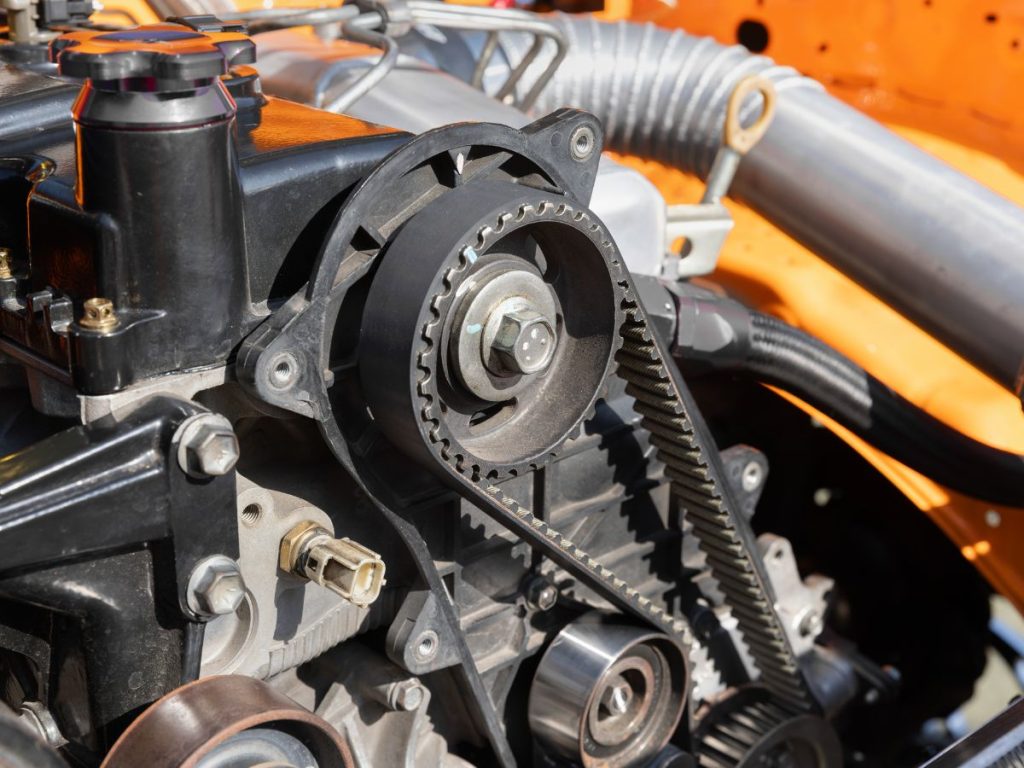
Timing belt replacement intervals by driving habits
Your driving habits can shorten or extend timing belt life.
Frequent short trips, stop-and-go traffic, extreme temperatures, and heavy loads place additional stress on engine components. Vehicles driven under these conditions often need earlier timing belt replacement.
Highway driving at consistent speeds tends to be less demanding, but age-related wear still applies.
Timing belt symptoms that signal replacement
Recognizing early timing belt symptoms can prevent catastrophic engine damage.
Common warning signs include:
- Engine misfires
- Ticking or clicking sounds from the engine
- Difficulty starting the vehicle
- Rough idling
- Oil leaks near the timing cover
These symptoms indicate the belt may be worn, loose, or contaminated with oil.
What happens if a timing belt breaks while driving
A broken timing belt often causes immediate engine shutdown. In many engines, internal components collide when the belt fails, leading to bent valves or damaged pistons.
This type of failure usually requires extensive Car Repair and can sometimes mean replacing the engine entirely. Preventative replacement is far less expensive than post-failure repairs.
Timing belt replacement cost explained
The timing belt replacement cost varies widely depending on the vehicle and labor requirements.
Typical cost factors include:
- Engine design
- Accessibility of components
- Labor time
- Parts included in the repair
Many vehicles require removal of engine mounts and accessories, which increases labor time.
Cost to replace timing belt compared to engine repairs
The cost to replace timing belt is usually much lower than repairing engine damage caused by belt failure.
While replacement may cost several hundred to over a thousand dollars, engine repairs can reach several thousand dollars. This makes timely replacement one of the most cost-effective maintenance decisions you can make.
Timing belt replacement and related parts
During timing belt replacement, technicians often recommend replacing additional components.
Common items replaced at the same time include:
- Tensioners
- Idler pulleys
- Water pump
- Seals
These parts are typically accessed during the same service, so replacing them together reduces future labor costs.
A complete timing belt kit usually includes the belt, tensioner, and pulleys for comprehensive service.
Alternator belt replacement cost vs timing belt service
Some drivers confuse timing belts with accessory belts and compare pricing.
The alternator belt replacement cost is much lower because it is an external belt that powers accessories. Replacing an alternator or serpentine belt is simpler and less labor-intensive than timing belt service.
This difference highlights why timing belt maintenance requires advance planning rather than waiting for symptoms.
Does age matter more than mileage for timing belts
Age is just as important as mileage when determining replacement intervals. Rubber materials break down over time due to heat and environmental exposure.
A vehicle with low mileage but an older belt may still require replacement. This is especially true for vehicles that sit unused for long periods.
Is timing belt replacement part of regular maintenance
Timing belt service is not usually included in basic maintenance plans such as oil changes. It is considered a major maintenance item scheduled at specific intervals.
Planning ahead for auto service ensures timing belt replacement does not become an unexpected expense.
Why Professional engine belt replacement matters
Timing belt service requires precision, proper alignment, and specialized tools. Incorrect installation can cause engine timing issues and internal damage.
Professional Auto Repair ensures the belt is installed correctly and tested thoroughly before returning the vehicle to service.
Why timing belt replacement timing matters
Delaying replacement increases the risk of sudden failure. Timing belts rarely show visible warning signs before breaking.
Replacing the belt at the recommended interval protects engine performance, fuel efficiency, and long-term reliability.
Why drivers trust URB’S Garage
URB’S Garage provides professional timing belt inspections and replacement services designed to protect engine performance. Their technicians follow manufacturer guidelines and use proper tools to ensure accurate installation and reliable results.
To explore available services or schedule an inspection, visit URB’S Garage anytime.
Conclusion
So, how often should you change your timing belt? Most vehicles require replacement between 60,000 and 100,000 miles, or sooner based on age and driving conditions.
Ignoring timing belt service can result in severe engine damage, while timely replacement protects your vehicle and saves money long term. Planning ahead and following manufacturer recommendations is the safest approach.
FAQ
1. How many miles does a timing belt last
Most timing belts last between 60,000 and 100,000 miles depending on vehicle design and driving conditions.
2. What are the signs a timing belt needs replacement
Common signs include engine misfires, ticking noises, oil leaks near the timing cover, and difficulty starting.
3. Does age matter more than mileage for timing belt replacement
Yes. Rubber belts degrade over time, so age can be just as important as mileage.
4. What happens if a timing belt breaks while driving
A broken belt can cause severe engine damage and may require extensive repairs or engine replacement.
5. Is timing belt replacement covered under regular maintenance
Timing belt replacement is a scheduled major maintenance service and is not usually included in basic maintenance plans.
Read Similar: How to Change Timing Belt?
