
Understanding how to change timing belt components is important because this single part plays a major role in keeping your engine running correctly. The timing belt synchronizes the rotation of the crankshaft and camshaft so engine valves open and close at the right time. When it wears out or fails, serious engine damage can occur.
Many drivers delay timing belt replacement because the symptoms are not always obvious. This guide explains how timing belts work, signs of failure, how replacement is done, how long it takes, and what it typically costs so you can make informed decisions before damage occurs.
Before starting this repair, it helps to know how often to change timing belt for your vehicle.
What a timing belt does and why it matters
A timing belt is an internal engine belt that controls engine timing. Unlike external belts, it sits behind a protective timing cover and is not visible during routine inspections.
If the timing belt slips or breaks, pistons and valves can collide, causing bent valves or engine failure. This makes timely engine belt replacement critical for long-term reliability.
Timing belt symptoms you should not ignore
Recognizing early timing belt symptoms helps prevent costly repairs.
Common warning signs include:
- Engine misfires
- Ticking or clicking noises from the engine
- Difficulty starting the vehicle
- Loss of power
- Oil leaks near the timing cover
These symptoms indicate wear that should be inspected immediately.
How long to change timing belt
One of the most common questions drivers ask is how long to change timing belt components.
In most vehicles, timing belt replacement takes between 3 and 6 hours. The exact time depends on:
- Engine design
- Vehicle make and model
- Accessibility of components
- Whether related parts are replaced
Vehicles with transverse engines or compact engine bays often require more labor time.
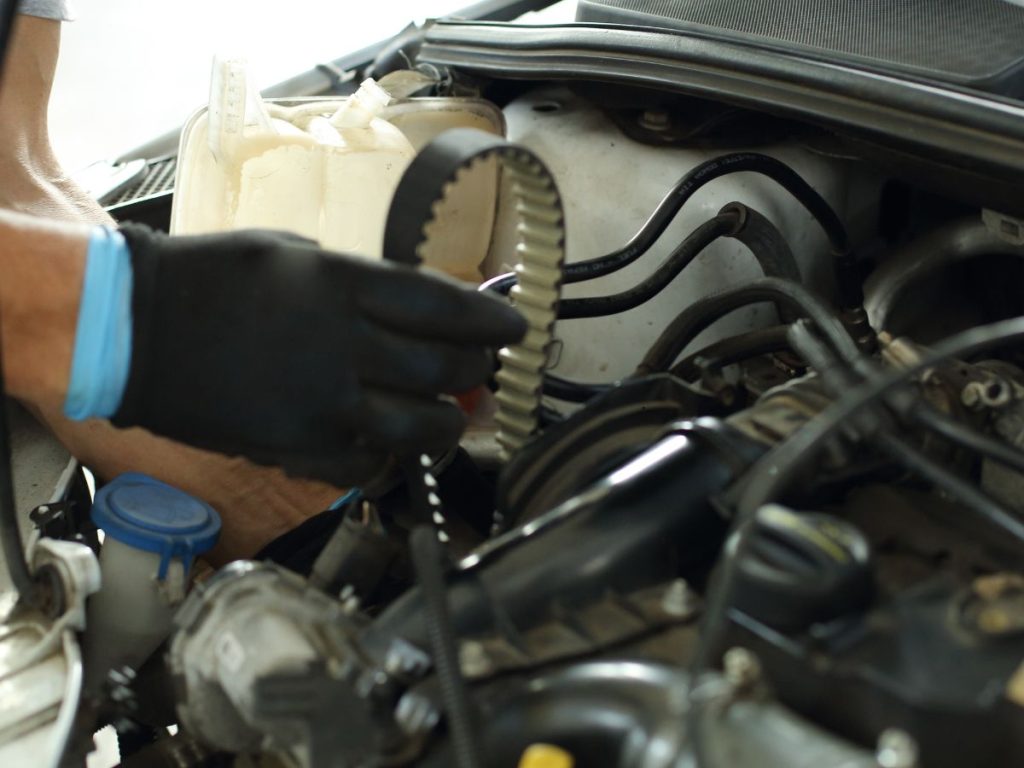
Step by step overview of how to change timing belt
While timing belt replacement should usually be handled by professionals, understanding the steps helps explain the labor involved.
1. Vehicle preparation
The engine is cooled, disconnected from power, and raised if needed for access.
2. Component removal
Accessory belts, engine mounts, and covers are removed to access the timing system.
3. Timing alignment
The engine is set to top dead center to maintain proper timing during replacement.
4. Remove old belt
The worn belt and tensioner are removed carefully.
5. Install timing belt kit
A timing belt kit is installed, which often includes the belt, tensioner, and pulleys.
6. Reassembly and testing
Components are reinstalled, and the engine is tested to confirm proper timing.
Incorrect installation can cause severe engine damage, which is why professional Auto Repair services are recommended.
Timing belt replacement cost explained
The timing belt replacement cost varies depending on vehicle type and labor requirements.
Typical cost factors include:
- Engine design
- Parts included in the repair
- Labor time
- Whether additional components are replaced
On average, timing belt replacement costs range from several hundred to over a thousand dollars. While this may seem high, it is far less expensive than repairing engine damage caused by belt failure.
Timing belt vs serpentine belt
Many drivers confuse timing belt vs serpentine belt, but they serve different purposes.
Timing belt:
- Controls engine timing
- Located inside the engine
- Failure causes major engine damage
Serpentine belt:
- Powers accessories like alternator and power steering
- Located outside the engine
- Failure usually does not damage the engine
Understanding this difference helps drivers prioritize maintenance.
Drive belt vs timing belt differences
The drive belt vs timing belt comparison is similar. Drive belts handle accessories, while the timing belt controls engine synchronization. Replacing a drive belt is simpler and cheaper than replacing a timing belt.
Should other parts be replaced during timing belt service
Many technicians recommend replacing additional components during belt replacement.
Common items replaced include:
- Water pump
- Tensioner
- Idler pulleys
- Seals
Replacing these parts during timing belt service saves labor costs later and improves reliability.
Can you change a timing belt yourself
Some experienced DIY mechanics attempt timing belt replacement, but it is not recommended for beginners.
Risks include:
- Incorrect timing alignment
- Engine damage on startup
- Voided warranties
- Costly mistakes
Professional Car Repair ensures accuracy, safety, and long-term performance.
What happens if a timing belt is installed incorrectly
Incorrect installation can result in:
- Engine misfires
- Bent valves
- Piston damage
- Complete engine failure
This is why timing belt service requires precision and specialized tools.
When should a timing belt be replaced
Most manufacturers recommend replacement between 60,000 and 100,000 miles. However, age also matters. Rubber belts degrade over time even if mileage is low.
Following manufacturer guidelines prevents unexpected failures.
Why professional timing belt service matters
Professional auto service ensures:
- Proper engine timing
- Accurate installation
- Replacement of worn components
- Thorough testing
Certified technicians follow exact specifications to protect engine integrity.
Why drivers trust URB’S Garage
URB’S Garage provides professional timing belt inspections and replacement services focused on protecting engine performance. Their technicians understand complex timing systems and follow precise procedures to prevent costly engine damage.
To explore services or schedule an inspection, visit URB’S Garage anytime.
Conclusion
Learning how to change timing belt components helps drivers understand why this service is critical. Timing belt replacement prevents serious engine damage, improves reliability, and protects long-term vehicle value.
Recognizing warning signs and replacing the belt at the recommended interval is far more affordable than repairing engine failure. Professional service ensures the job is done safely and correctly.
FAQ
1. What tools are needed to change a timing belt
Specialized tools include timing locks, torque wrenches, pullers, and engine alignment tools.
2. How long does it take to replace a timing belt
Most replacements take between 3 and 6 hours depending on vehicle design.
3. Can I change a timing belt myself or should I hire a mechanic
Professional service is recommended due to the precision required and risk of engine damage.
4. What happens if the timing belt is installed incorrectly
Incorrect installation can cause severe engine damage, including bent valves and piston failure.
5. Should I replace the water pump when changing the timing belt
Yes, replacing the water pump during timing belt service is often recommended to prevent future labor costs.
Read Similar: How Often Should You Change Your Timing Belt?
