Your ignition coil plays a key role in keeping your engine running smoothly by turning battery power into the spark needed to ignite fuel. Here’s where Ignition Coil Maintenance and Replacement finneytown becomes essential for long-term vehicle performance.
When it starts to go bad, it can lead to misfires, rough idling, and poor gas mileage.
In this guide, we’ll go over the most common signs of a failing ignition coil and how to spot the problem before it turns into a bigger repair.
What are the signs of a bad ignition coil?
Signs of a bad ignition coil include rough idling, misfiring, poor acceleration, and a check engine light. If your car struggles to start, the ignition coil might be the culprit.
Key Takeaways
- Ignition coils play a critical role in starting your engine and ensuring smooth performance.
- A bad ignition coil can cause poor engine performance, misfires, and even engine stalling.
- Early detection of a faulty ignition coil can prevent further damage and costly repairs.
Engine Misfires
One of the most common signs of a failing ignition coil is engine misfires. Misfires occur when one or more cylinders fail to ignite properly, which causes the engine to run roughly or unevenly.
This can happen when the ignition coil can’t generate enough voltage to fire the spark plugs effectively.
What to look for
If you notice your car stumbling or hesitating during acceleration, or if it feels like it’s struggling to start, these could be signs of an ignition coil issue.
The engine may also misfire at idle or make a popping noise. If those misfires keep happening, don’t wait it out—ignoring it can lead to bigger engine damage.
A quick engine coil replacement in Erlanger might be all it takes to get your car running clean and smooth again.
Check Engine Light Appears
A faulty ignition coil can trigger the check engine light on your dashboard.
Most modern vehicles have sensors that can detect irregularities in engine performance, and a misfiring cylinder will usually cause the check engine light to come on.
What to do
If your check engine light is on, it’s a good idea to have the vehicle’s codes read using an OBD-II scanner.
The scanner will reveal if there are any misfire codes related to the ignition coil or spark plugs.
However, it’s important to remember that the check engine light can indicate a range of issues, so a proper diagnosis is essential.
Poor Acceleration
Another sign of a bad ignition coil is poor acceleration.
When the ignition coil isn’t functioning properly, it may struggle to send power to the spark plugs, causing a delay in the ignition process.
This can result in sluggish acceleration, especially when trying to speed up on the highway or when merging into traffic.
What to look for
If your vehicle takes longer than usual to pick up speed, or if it feels like the engine is bogging down, a bad ignition coil could be the cause.
A sudden loss of power when trying to accelerate could also indicate a misfire due to a faulty ignition coil.
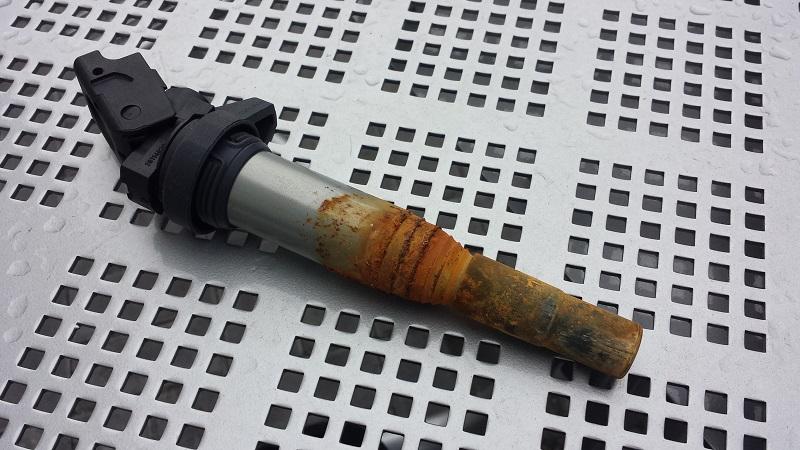
Rough Idle or Stalling Engine
If your car is idling roughly or stalling while driving, this could be a sign of a bad ignition coil.
A malfunctioning ignition coil can prevent the spark plugs from firing properly, which can lead to the engine running unevenly.
In some cases, the engine may stall unexpectedly, particularly when coming to a stop or at low speeds.
What to look for
Pay attention to your car’s idle speed. If the engine seems to be shaking or fluctuating at idle, this could be a sign of poor spark delivery.
Stalling while at a stop or while driving in traffic can also be an indicator of ignition coil issues.
Decreased Fuel Efficiency
A bad ignition coil can lead to inefficient fuel combustion, causing your vehicle to consume more fuel than normal.
When the ignition coil is not firing the spark plugs as it should, it can cause incomplete combustion in the engine.
This means more fuel is needed to achieve the same power output, reducing your fuel efficiency.
What to look for
If you notice a sudden drop in miles per gallon (MPG) or if you have to fill up your tank more frequently, a failing ignition coil might be contributing to the problem.
Keep track of your fuel consumption and take note of any significant changes.
Backfiring or Loud Noises from the Engine
A bad ignition coil can cause unburnt fuel to enter the exhaust system, which can lead to backfiring.
This occurs when the fuel ignites outside the combustion chamber, often creating loud popping or banging sounds.
What to look for
If you hear unusual noises coming from the engine, such as backfiring or popping sounds, it’s a sign that there might be an issue with the ignition system.
This can also be accompanied by poor performance or misfires.
Difficulty Starting the Engine
When the ignition coil is malfunctioning, it may not generate enough voltage to properly ignite the air-fuel mixture in the engine.
This can cause difficulty starting the vehicle, particularly during cold weather or after the car has been sitting for a while.
What to look for
If you find that your car is taking longer than usual to start or requires multiple attempts to turn over, the ignition coil could be to blame.
A faulty coil can prevent the engine from firing correctly, making it difficult to start.
Frequently Asked Questions (FAQs)
1. How long does an ignition coil last?
An ignition coil typically lasts between 80,000 and 100,000 miles, depending on your driving habits and maintenance. However, some coils may fail earlier due to poor quality or excessive wear.
2. Can a bad ignition coil cause engine damage?
Yes, if a bad ignition coil causes repeated misfires, it can lead to engine damage. This may result in damaged spark plugs, catalytic converter failure, and poor fuel economy.
3. Can I drive with a bad ignition coil?
While you can drive with a bad ignition coil for a short period, it is not recommended. Continuing to drive with a faulty coil can lead to further damage to the engine and decreased performance.
Conclusion
A bad ignition coil can lead to several noticeable symptoms, including engine misfires, poor acceleration, and difficulty starting the vehicle.
If you notice any of these signs, it’s important to diagnose and replace the faulty ignition coil as soon as possible.
Regular maintenance and periodic inspections of the ignition system can help prevent issues before they escalate.
Always consult a professional mechanic if you are unsure or if the problem persists after replacing the coil.
Early detection and proper maintenance will ensure your engine continues to run smoothly and reliably.
