Hearing strange noises from your engine? It could be a bad timing chain. Rattling, ticking, or grinding sounds are early warning signs you shouldn’t ignore.
This guide breaks down what those sounds mean, how to spot trouble early, and how to avoid costly engine damage before it’s too late.
What does a bad timing chain sound like?
A bad timing chain often makes a rattling or ticking noise, especially when the engine is idling or accelerating. If you hear this, it’s time to get it checked by a mechanic.
Key Takeaways
- A bad timing chain often produces a rattling or whining noise from the engine.
- Timing chain issues can lead to severe engine damage if not addressed.
- Regular maintenance and early detection can prevent costly repairs.
What Is a Timing Chain and Why Does It Matter?
Before understanding the symptoms of a bad timing chain, it’s important to know its function.
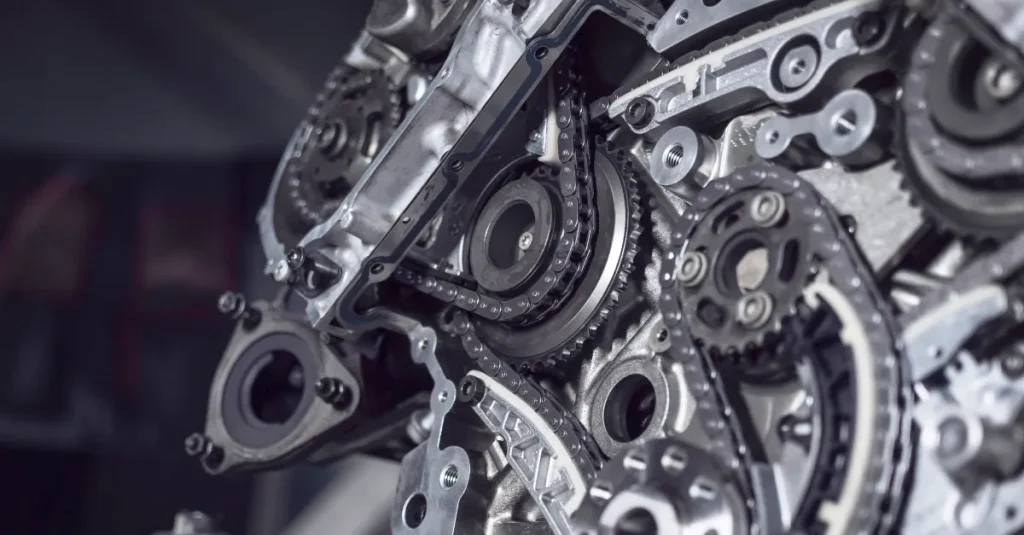
The timing chain is responsible for synchronising the rotation of the crankshaft and camshaft in your engine.
This ensures that the engine’s valves open and close at the correct times during each cylinder’s intake and exhaust strokes.
If the timing chain is not functioning properly, the engine’s timing can be disrupted, potentially causing the engine to misfire or fail completely.
Signs of a Bad Timing Chain
A bad timing chain doesn’t always present itself with obvious issues, but there are common symptoms that signal something might be wrong. Here’s what to look out for:
Rattling Noise from the Engine
One of the most common sounds associated with a failing timing chain is a rattling noise that comes from the engine, especially when the car is idling or accelerating.
This noise is caused by the chain becoming loose or worn.
A loose timing chain may also be unable to maintain proper tension, leading to a rattling or slapping sound as the chain moves against other components in the engine.
What to Listen For: A metallic rattling sound that starts when the engine is running. The sound often becomes more noticeable when the engine is idling or during acceleration.
Whining or High-Pitched Noise
Another sound that can indicate a timing chain problem is a whining or high-pitched noise, often described as a “whistling” or “screeching” sound.
This can occur if the timing chain is rubbing against the timing gears or if it’s starting to break or malfunction.
What to Listen For: A whining or whistling noise that increases in pitch when accelerating.
This could mean the chain is loose, which can cause it to rub against the engine’s surrounding components.
Metallic Clanking Noise
If the timing chain has severe wear, it can lead to a metal-on-metal clanking noise. This noise is much more pronounced and is typically caused by the chain’s failure to maintain proper tension.
As the chain moves erratically, it may collide with other components inside the engine, creating a more intense sound.
What to Listen For: A loud, clanking, or banging noise coming from the engine, often associated with heavy wear or broken links in the timing chain.
Other Symptoms of a Bad Timing Chain
While unusual sounds are a key indicator of a bad timing chain, there are other symptoms you should be aware of. Here are a few additional signs that your timing chain might be failing:
Engine Misfires
A worn or broken timing chain can cause the engine’s valves to open and close at the wrong times, leading to misfires.
If you notice your engine hesitating, stalling, or running rough, the timing chain may be the cause.
Check Engine Light
If the timing chain is faulty, it can cause miscommunication between the camshaft and crankshaft, triggering the engine control unit (ECU) to illuminate the check engine light.
A mechanic can use a diagnostic tool to check for codes related to timing chain issues and sometimes compare them to other repair needs, such as the cost of replacing crankshaft position sensor, since both components affect engine timing and performance.
Poor Engine Performance
A worn timing chain can lead to a decrease in engine performance.
You may notice a lack of power, poor acceleration, or difficulty maintaining speed, especially under heavy load or acceleration.
Causes of a Bad Timing Chain
Several factors can cause a timing chain to fail. While wear and tear are inevitable, other issues may accelerate the process.
Lack of Maintenance
Failure to change the oil regularly can lead to increased friction and heat inside the engine, which can wear out the timing chain more quickly.
The timing chain relies on engine oil for lubrication, so keeping the oil clean and at the right level is critical.
Excessive Heat
High engine temperatures can also contribute to the premature wear of the timing chain. When the engine gets too hot, the chain can become loose, stretch, or break.
Manufacturing Defects
Though rare, manufacturing defects in the timing chain or the components it works with can lead to premature failure.
If you suspect this is the case, it’s important to consult with a professional who can assess whether the timing chain was faulty from the beginning.
Frequently Asked Questions
1. What does a bad timing chain sound like?
A bad timing chain can produce a rattling, whining, or clanking noise, especially when the engine is idling or accelerating. This noise is caused by the chain becoming loose or worn.
2. How long can I drive with a bad timing chain?
It is not advisable to drive with a bad timing chain, as it can cause severe engine damage. If you suspect the timing chain is failing, have your vehicle inspected by a mechanic immediately.
3. How much does it cost to replace a timing chain?
Replacing a timing chain can be expensive, with costs ranging from $1,000 to $2,500, depending on the vehicle and the complexity of the job.
Conclusion
A bad timing chain can cause a range of issues for your vehicle, from unusual engine noises to poor performance.
If you hear rattling, whining, or clanking sounds, it’s important to address the issue promptly to avoid further damage.
Regular maintenance, such as oil changes and monitoring engine temperature, can help extend the life of your timing chain.
If you suspect a problem, it’s best to consult with a professional mechanic who can inspect the timing chain and recommend the necessary repairs.
Taking care of your timing chain can save you from expensive repairs and ensure your engine continues to run smoothly.
