
Confused about wheel alignment and balancing? You’re not alone!
While both are crucial for your car’s health, many drivers aren’t clear on the differences.
In this blog, we break down what each service involves, why they’re vital for safety and performance, and how to tell when your car needs them. Keep reading to learn more!
What’s the difference between wheel alignment and balancing?
Alignment adjusts the angle of your wheels, while balancing ensures they’re evenly weighted. Both are crucial for smooth driving and tire longevity.
Key Takeaways
- Wheel Alignment: Adjusts the angles of your car’s wheels to ensure they’re properly aligned with each other and the road, improving handling, tyre life, and fuel efficiency.
- Wheel Balancing: Ensures your tyres are evenly balanced, preventing vibrations and uneven tyre wear for a smoother ride.
- Both Are Crucial: Wheel alignment and balancing complement each other, and both are necessary for the overall performance and longevity of your vehicle.
What Is Wheel Alignment?
Wheel alignment is the process of adjusting the angles of your car’s wheels to ensure they are aligned to the manufacturer’s specifications.
Looking for reliable tire balancing service in Erlanger, KY? Proper wheel and tire balancing is crucial to maintaining a smooth and stable ride. At Urb’s Garage, our expert technicians use advanced equipment to ensure your tires are evenly balanced, helping to eliminate vibrations, reduce uneven tread wear, and extend the life of your tires. If you notice your steering wheel shaking or your vehicle pulling to one side, it might be time to schedule a balancing service. Visit us today and keep your drive safe and comfortable!
1. Why Is Wheel Alignment Important?
Proper wheel alignment is essential for a number of reasons:
- Better Handling: Misaligned wheels can make your car feel unstable or pull to one side, affecting your ability to steer and control the vehicle.
- Extended Tyre Life: Misalignment causes uneven tyre wear, meaning you’ll need to replace tyres more frequently. Proper alignment helps tyres wear evenly, extending their lifespan.
- Improved Fuel Efficiency: A misaligned vehicle has increased rolling resistance, which can decrease fuel efficiency. Correct alignment ensures that the car operates more efficiently, saving you money on fuel.
- Enhanced Safety: Poor alignment can cause the car to drift or steer unpredictably, which can be dangerous, particularly when driving at high speeds or in emergency situations.
2. How Does Wheel Alignment Work?
During a wheel alignment, a technician will adjust the angles of your wheels. The three primary angles that are adjusted include:
- Camber: The inward or outward tilt of the wheels when viewed from the front of the vehicle.
- Toe: The direction the tyres point relative to the centreline of the vehicle (inward or outward).
- Caster: The angle of the steering axis, which affects the steering balance and stability of the vehicle.
By aligning these angles to their correct positions, the vehicle will drive smoothly, the tyres will wear evenly, and the car will be more fuel-efficient.
Routine vehicle care includes cosmetic fixes, and knowing car paint chip repair steps helps prevent rust and paint damage.
What Is Wheel Balancing?
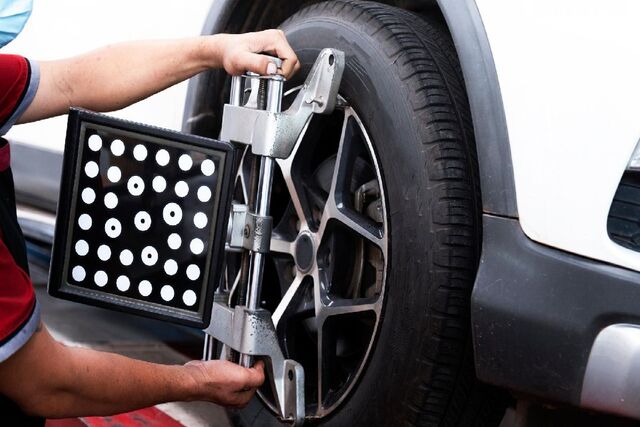
Wheel balancing is a process that ensures your car’s wheels are evenly balanced around their axles.
It involves adjusting the weight distribution of the tyres to prevent them from being unevenly distributed.
Unbalanced wheels can cause vibrations and lead to premature wear of the tyres.
1. Why Is Wheel Balancing Important?
Wheel balancing is just as crucial as wheel alignment for ensuring a smooth, safe, and comfortable driving experience. Here’s why balancing matters:
- Smooth Ride: Unbalanced wheels cause vibrations that you’ll feel through the steering wheel, seat, or floorboard. These vibrations can be distracting and uncomfortable, especially at higher speeds.
- Even Tyre Wear: Unbalanced wheels lead to uneven wear on the tyres, which can reduce their lifespan. Proper balancing ensures that the tyres wear evenly and last longer.
- Prevents Strain on Suspension: If wheels are unbalanced, the imbalance puts extra strain on the suspension system, leading to more wear on the suspension components.
- Improved Safety: Unbalanced wheels can cause your car to handle poorly, particularly at higher speeds or when turning. Proper balancing helps the car maintain stability and control, particularly in challenging driving conditions.
2. How Does Wheel Balancing Work?
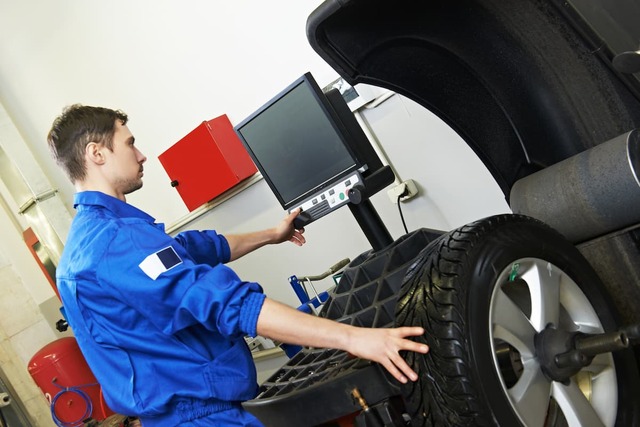
During a wheel balancing service, a technician uses a machine to spin each tyre and wheel assembly.
The machine detects any imbalances and then places small weights on the wheel to correct the distribution. These weights ensure that the wheel rotates evenly, without causing any vibrations.
Tire balancing with beads works by using small, specially designed beads that shift and adjust as the tire moves, helping to evenly distribute weight. Unlike traditional weights, the beads provide a dynamic balancing solution, offering smooth performance and improved tire longevity.
The Difference Between Wheel Alignment and Balancing
Though both wheel alignment and balancing contribute to your car’s overall performance and handling, they serve different purposes. Here’s a breakdown of the key differences:
1. Purpose
Alignment: The purpose of wheel alignment is to adjust the angles of the wheels to ensure they are properly positioned relative to the vehicle and the road.
This helps improve handling, safety, and fuel efficiency.
Balancing: The goal of wheel balancing is to ensure that the weight of the tyres and wheels is evenly distributed, preventing vibrations and ensuring a smoother ride.
2. Symptoms of a Problem
Alignment Issues: If your car pulls to one side, if your steering wheel is off-center, or if you notice uneven tyre wear, it’s likely time for an alignment.
Balancing Issues: If your car vibrates at higher speeds, especially when accelerating or decelerating, this is usually a sign of unbalanced wheels.
3. Impact on the Vehicle
Alignment: Poor alignment leads to uneven tyre wear, increased fuel consumption, and poor handling. It can also cause the vehicle to drift or pull to one side.
Balancing: Unbalanced wheels cause vibrations, which can make the driving experience uncomfortable. Over time, it can also lead to damage to the suspension system and uneven tyre wear.
4. Frequency
Alignment: Wheel alignment should be checked every 2 to 3 years or when you notice symptoms like poor handling or uneven tyre wear.
Balancing: Wheel balancing is typically done when you get new tyres or if you notice vibrations while driving. It’s a good idea to have it checked when you experience symptoms of imbalance.
How to Tell If You Need Wheel Alignment or Balancing
If you’re experiencing problems with your vehicle’s handling, it can sometimes be difficult to figure out whether you need an alignment or balancing.
Here’s a quick guide to help you determine which service is needed:
1. Signs You Need Wheel Alignment:
The car pulls to one side when driving straight. Your steering wheel is off-center when driving straight.
Tyres show signs of uneven wear (for example, one side is more worn than the other). You notice a vibration or discomfort in the steering wheel, particularly at higher speeds.
2. Signs You Need Wheel Balancing:
The car vibrates, particularly at high speeds, and you can feel it in the steering wheel, floorboard, or seat.
Your tyres are wearing unevenly, but the alignment appears to be correct. You hear noise or feel vibration in the steering wheel or seat when driving.
Frequently Asked Questions
1. Can wheel alignment and balancing be done at the same time?
Yes, many auto shops offer both services during the same visit. Having them done together can save time and ensure your car’s overall performance is optimal.
2. How long does wheel alignment take?
Wheel alignment typically takes around 1 to 1.5 hours, depending on the vehicle’s condition and any necessary adjustments.
3. How long does wheel balancing take?
Wheel balancing usually takes about 30 minutes to an hour, depending on the number of wheels being balanced and the type of equipment used.
Conclusion
Both wheel alignment and wheel balancing are essential for ensuring your vehicle’s smooth performance and safety on the road.
While they serve different purposes, they complement each other by improving handling, enhancing tyre life, and boosting fuel efficiency.
Regularly maintaining both will save you money in the long run, prevent premature wear on your tyres, and keep your car running safely and efficiently.
Be sure to schedule these services as part of your routine vehicle maintenance, and address any symptoms of misalignment or imbalance promptly to keep your ride comfortable and secure.
For a full breakdown, read this complete alignment time guide.
