If you’ve experienced issues with your car’s handling or uneven tire wear, you’ve likely encountered terms like “tire balancing” and “wheel alignment.”
Though often confused, these two procedures serve different purposes.
In this article, we’ll explain the differences, how each works, and why both are essential for your vehicle’s performance and longevity.
Is tire balancing the same as alignment?
No, tire balancing and alignment are different. Balancing ensures the tires spin evenly, while alignment adjusts the angles of the tires to ensure they are parallel and improve handling.
Key Takeaways
- Tire balancing and wheel alignment address different issues related to your vehicle’s wheels and tires.
- Tire balancing ensures your tires spin evenly, while wheel alignment ensures your tires are properly angled for optimal contact with the road.
- Both processes contribute to smoother driving, increased tire lifespan, and improved safety.
What Is Tire Balancing?
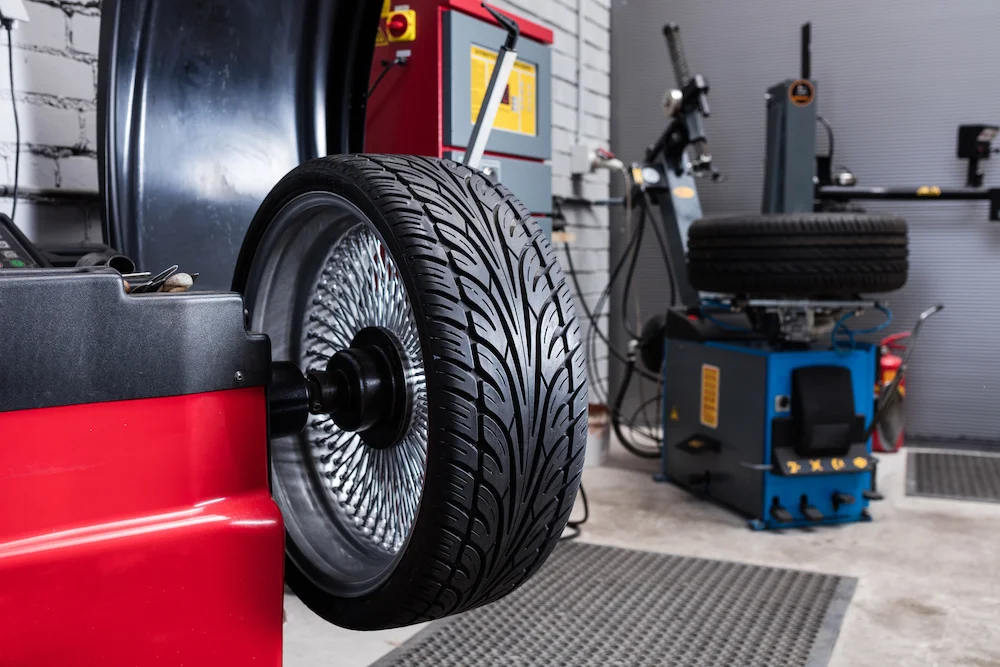
Tire balancing involves adjusting the weights of your tires to ensure they rotate evenly while driving.
An unbalanced tire can cause vibrations, which not only affect the comfort of your ride but also lead to uneven tire wear and potential damage to your vehicle’s suspension components.
How Does Tire Balancing Work?
When your tires are balanced, small weights are placed on the rim of each tire to distribute the weight evenly.
This ensures that the tire rotates smoothly and evenly at higher speeds. The balancing process is typically done using a special machine that spins the tire and identifies any imbalances.
Once the imbalance is found, small weights are added to the appropriate areas of the wheel.
Why Is Tire Balancing Important?
Proper tire balancing is crucial for several reasons:
- Improved ride comfort: Unbalanced tires can cause vibrations, making your driving experience uncomfortable.
- Increased tire lifespan: Unbalanced tires wear unevenly, which can shorten their lifespan. Proper balancing ensures more even wear.
- Better fuel efficiency: Tires that are balanced properly help reduce friction, which can lead to better fuel efficiency.
When Should You Get Tire Balancing?
You should consider getting your tires balanced if you experience any of the following:
Unusual vibrations while driving, particularly at higher speeds. Uneven tire wear. After replacing tires or rotating them.
After hitting a large pothole or curb that may throw your tires out of balance.
What Is Wheel Alignment?
Wheel alignment refers to adjusting the angles of your vehicle’s wheels to ensure they are positioned correctly in relation to the car’s frame.
Proper alignment ensures that your tires make even contact with the road, which improves handling, increases tire lifespan, and prevents unnecessary wear.
How Does Wheel Alignment Work?
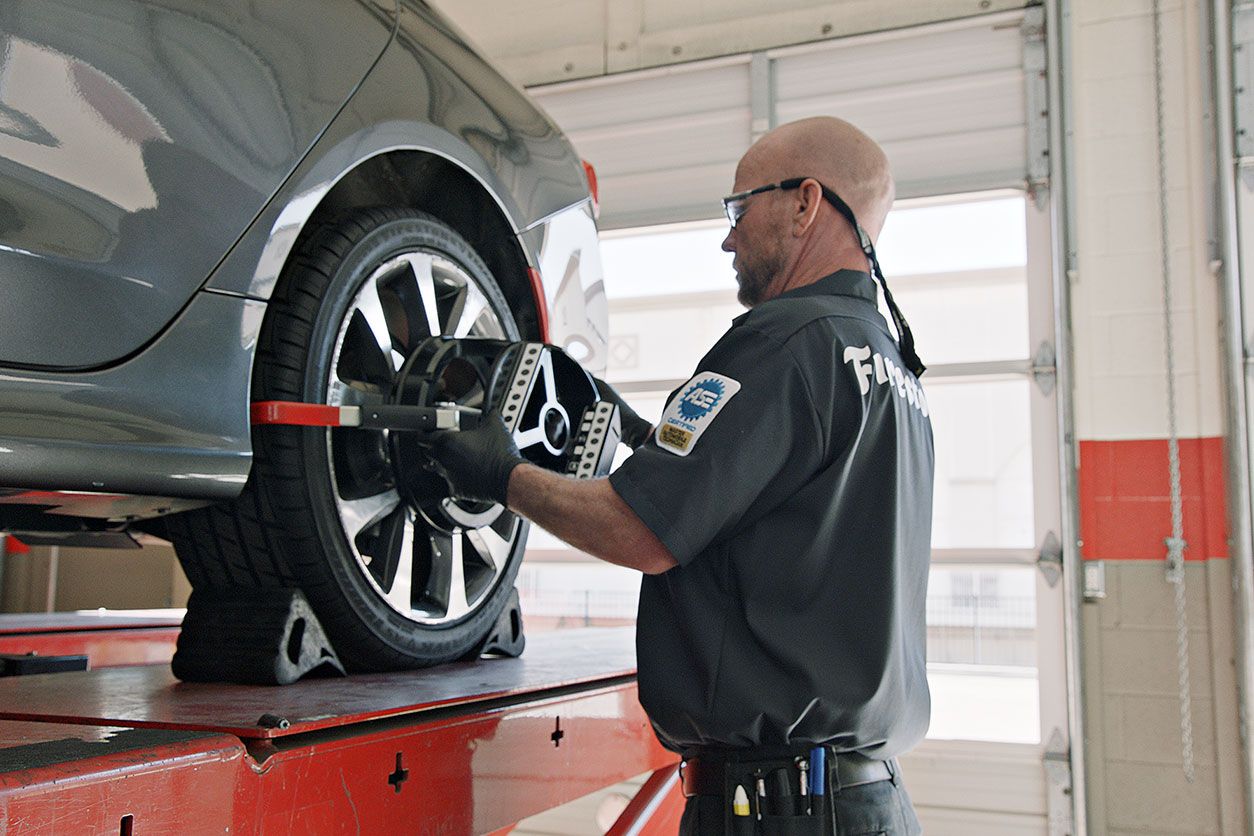
When your car is aligned, the angles of the tires are adjusted to ensure that they are parallel to each other and perpendicular to the ground. There are three main alignment angles:
- Camber: The tilt of the tire when viewed from the front of the vehicle. If the top of the tire leans outward, it’s positive camber; if it leans inward, it’s negative camber.
- Toe: The angle at which the tires point in relation to the centreline of the vehicle. If the front of the tires points inward, it’s called “toe-in”; if they point outward, it’s called “toe-out”.
- Caster: The angle of the steering axis when viewed from the side. Caster affects the vehicle’s steering and stability.
A professional mechanic uses special equipment to adjust these angles to manufacturer specifications.
Why Is Wheel Alignment Important?
Proper wheel alignment is essential for:
- Improved handling: Misaligned wheels can make your car feel less responsive or harder to steer.
- Even tire wear: When the wheels are not aligned correctly, your tires wear unevenly, which can lead to the need for premature tire replacement.
- Increased safety: Poor alignment can cause your vehicle to pull to one side, making it harder to control, especially in adverse conditions.
When Should You Get Wheel Alignment?
You should consider having your vehicle aligned in the following situations:
After replacing your tires. If you notice your car pulling to one side while driving. If your steering wheel is off-centre when driving straight.
After hitting a curb or pothole that could have knocked your wheels out of alignment.
Key Differences Between Tire Balancing and Wheel Alignment
While both tire balancing and wheel alignment contribute to your vehicle’s performance, they address different issues. Here’s a comparison to help you understand their distinct roles:
1. Purpose
Tire Balancing: Ensures that your tires spin evenly and smoothly, reducing vibrations and improving ride comfort.
Wheel Alignment: Ensures that your tires are positioned correctly in relation to the car’s frame, which helps prevent uneven tire wear and improves handling.
2. Process
Tire Balancing: Involves adding weights to the wheels to correct any imbalances in the tire’s weight distribution.
Wheel Alignment: Involves adjusting the angles of the wheels to ensure they are parallel to each other and perpendicular to the ground.
3. Impact
Tire Balancing: Affects ride comfort, tire wear, and fuel efficiency.
Wheel Alignment: Affects handling, steering, tire wear, and vehicle stability.
4. Frequency
Tire Balancing: Needed when you experience vibrations, after replacing or rotating tires, or after hitting a pothole.
Wheel Alignment: Needed when you notice uneven tire wear, your car pulls to one side, or after certain impacts like hitting a curb.
Common Misconceptions About Tire Balancing and Wheel Alignment
There are some common misconceptions that people have about tire balancing and wheel alignment. Let’s clear them up:
1. Balancing and alignment are the same thing.
This is one of the most common misunderstandings. While both processes are essential for maintaining your car’s performance, they address different issues.
Balancing corrects uneven weight distribution in the tires, while alignment ensures your wheels are angled correctly for optimal handling.
2. You only need one of the two services.
Both balancing and alignment are necessary for your car’s well-being. Skipping either one can lead to premature tire wear, poor handling, and more costly repairs down the road.
It’s essential to have both services performed at the right time.
3. I don’t need an alignment if my steering feels fine.
Even if your steering feels fine, misaligned wheels can still cause uneven tire wear, which can affect your car’s overall performance and safety.
It’s best to have an alignment check if you suspect any issues.
When to Get Tire Balancing and Wheel Alignment
To keep your vehicle in top condition, it’s important to follow a regular maintenance schedule for both tire balancing and wheel alignment. Here’s a general guideline:
- Every 6,000 to 8,000 miles: Have your tires balanced, especially if you’re rotating them at the same time.
- Every 12,000 miles: Have your wheel alignment checked, or if you notice any handling issues, uneven tire wear, or steering problems.
- After any impact: If you’ve hit a pothole, curb, or speed bump, it’s a good idea to have both your alignment and balancing checked to avoid further damage.
Frequently Asked Questions
1. How do I know if my car needs tire balancing or alignment?
If your car vibrates while driving, it may need tire balancing. If the car pulls to one side or the steering wheel is off-centre, it may need an alignment.
2. Can I drive with unbalanced tires or misaligned wheels?
While you can drive, it’s not recommended. Unbalanced tires cause vibrations, and misaligned wheels can lead to uneven tire wear, reduced handling, and safety issues.
3. How often should I check my alignment and tire balance?
It’s a good idea to check your tire balance every 6,000 to 8,000 miles and your wheel alignment at least once a year or whenever you notice any signs of handling issues.
Conclusion
Understanding the difference between tire balancing and wheel alignment is essential for keeping your vehicle in top condition.
Both processes play an important role in ensuring smooth driving, long-lasting tires, and overall vehicle performance.
If you’ve noticed any issues such as vibrations, uneven tire wear, or handling problems, it’s time to get your car checked.
