Your car’s engine relies on many parts working in harmony, and the timing belt plays a crucial role in keeping everything running smoothly.
But what does it do, and why is it so vital?
In this blog, we’ll dive into the function of the timing belt, how it works, and when to replace it to avoid costly damage. Keep reading to learn more!
What is a timing belt and why is it important?
The timing belt synchronizes the engine’s moving parts. It ensures the camshaft and crankshaft work together, allowing proper engine timing for smooth performance.
Key Takeaways
- Timing Belt Function: The timing belt synchronises the rotation of the crankshaft and camshaft, ensuring that the engine’s valves and pistons work in harmony.
- Importance: A well-maintained timing belt is essential for the proper functioning of your engine. If it fails, it can cause severe engine damage.
- Replacement: Timing belts typically need to be replaced every 60,000 to 100,000 miles, depending on your vehicle’s make and model. This helps maintain your timing belt replacement timeline and prevents unexpected failures.
What Is a Timing Belt and What Does It Do?
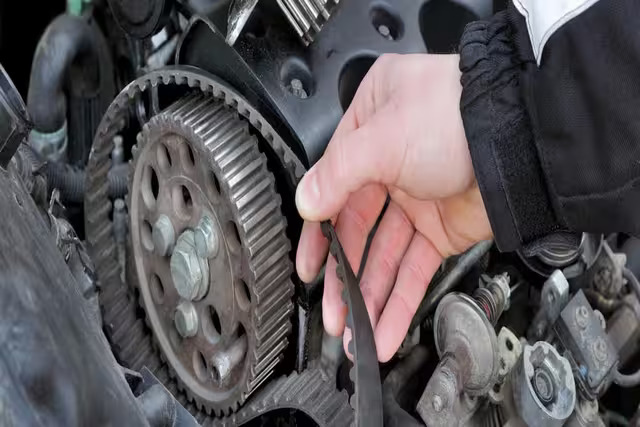
A timing belt is a rubber belt with teeth that connects the crankshaft to the camshaft in your vehicle’s engine.
It plays a critical role in controlling the timing of the engine’s valves, ensuring that they open and close at the right moment in sync with the pistons.
This synchronisation is essential for the engine to function properly.
The Timing Belt’s Role in Your Engine’s Operation
The timing belt is responsible for:
Syncing the Camshaft and Crankshaft: The camshaft controls the opening and closing of the engine’s valves, while the crankshaft controls the pistons.
The timing belt ensures that the valves open and close at the exact time the pistons reach the right position, preventing interference between the two.
Preventing Engine Damage: If the timing belt wears out or breaks, the pistons and valves can collide, causing serious engine damage, which can be costly to repair.
A functioning timing belt prevents this from happening. Similarly, engine damage from a broken timing chain can be just as severe—if not more—since timing chains are typically found in interference engines. When the chain snaps, internal components may clash violently, leading to bent valves, damaged pistons, or even a ruined engine block.
Controlling Other Components: In some engines, the timing belt also drives other components such as the water pump, alternator, and power steering pump, further enhancing the importance of its condition.
How Does a Timing Belt Work?
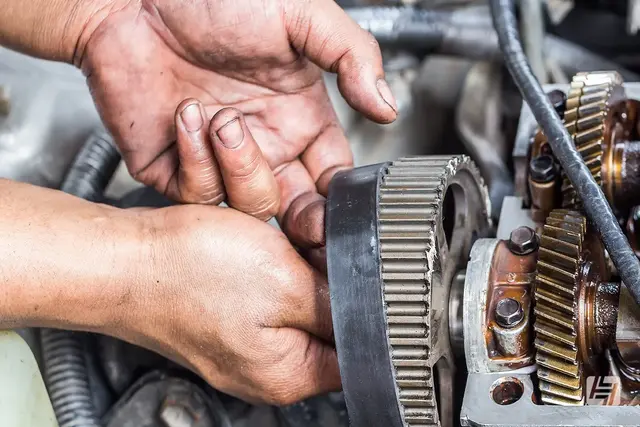
In a car’s engine, the timing belt plays a critical role in controlling the timing of the combustion process. Here’s how it works:
Engine Rotation: As the crankshaft turns, it rotates the timing belt, which is connected to the camshaft.
The camshaft then turns, controlling the timing of the opening and closing of the engine’s intake and exhaust valves.
Valve Synchronisation: The timing belt ensures that the valves open and close at the exact moment when the pistons are in the correct position.
This precise timing is essential for maintaining engine efficiency and avoiding damage.
Powering Other Components: In some engines, the timing belt also powers additional components like the water pump and alternator.
As the timing belt rotates, it transfers energy to these parts, helping them function.
Why Is a Timing Belt So Important?
A healthy timing belt is vital to your engine’s performance. Without it, the engine would not function correctly, and major issues would arise. Here’s why the timing belt is so crucial:
1. Preventing Engine Damage
The most critical function of the timing belt is to ensure that the pistons and valves do not collide.
If the timing belt fails, the pistons and valves can move out of sync, causing them to hit each other.
This can lead to serious damage to the engine, often requiring expensive repairs or even a full engine replacement.
2. Ensuring Engine Efficiency
A properly functioning timing belt ensures that the engine runs smoothly, with the valves and pistons working in perfect harmony.
This keeps the engine running at peak efficiency, improving overall performance and fuel economy.
3. Preventing Other Component Failures
In some engines, the timing belt also powers other components like the water pump.
If the timing belt fails, it can cause these components to stop working, potentially leading to overheating or power loss.
Regular maintenance ensures that all engine components remain in good working condition.
How Often Should You Replace Your Timing Belt?
The timing belt is designed to last for a long time, but it does wear out over time and should be replaced at regular intervals.
However, if you’re dealing with a timing chain instead of a belt, there are a few quick checks you can do. How do you know if your timing chain is bad in 5 minutes? Listen for rattling noises from the engine, check for engine misfires, or look for metal shavings in the oil. These are all warning signs that your timing chain may be worn or failing.
Typically, you should replace your timing belt every 60,000 to 100,000 miles.
However, this can vary depending on your vehicle’s make and model, so always refer to your owner’s manual for specific recommendations.
Even if you don’t experience any symptoms of a bad timing belt, it’s important to replace it according to the manufacturer’s recommendations to avoid unexpected failures.
Replacing the belt on schedule also helps manage the timing belt replacement cost effectively.
How Much Does It Cost to Replace a Timing Belt for Maintenance?
The cost to replace a timing belt can vary depending on the make and model of your vehicle, as well as the labor rates in your area.
On average, timing belt replacement can cost anywhere from $500 to $1,000 or more. This includes the cost of parts and labor.
Keep in mind that many mechanics will also recommend replacing the water pump, tensioners, and pulleys while the timing belt is being replaced, which can add to the total cost.
However, it’s a good idea to replace these components at the same time to prevent further issues down the road.
Frequently Asked Questions
1. How can I tell if my timing belt is bad?
Symptoms of a bad timing belt include rough idling, engine misfires, unusual noises, and a check engine light. If you notice any of these, have your timing belt checked immediately.
2. How long does a timing belt last?
Timing belts typically last between 60,000 and 100,000 miles, depending on your vehicle and driving conditions. Regular maintenance is essential to prevent unexpected failure.
3. Can I drive with a bad timing belt?
It’s not advisable to drive with a bad timing belt. If the timing belt fails, it can cause severe engine damage, which can result in costly repairs. It’s best to replace the timing belt on time.
Conclusion
Your car’s timing belt is a crucial component that ensures the smooth operation of your engine. If it wears out or fails, it can cause serious damage to your engine and lead to costly repairs.
Regularly replacing your timing belt according to your car’s manufacturer recommendations is essential to prevent misfires, poor performance, and engine failure.
If you notice any signs of a bad timing belt, don’t wait to address the issue. Contact a professional mechanic to inspect your timing belt and replace it if necessary.
